Showing posts with label Ancients. Show all posts

Wednesday, 15 May 2024

Sussex

 My wife and I have just returned from a very enjoyable coach tour to West Sussex.   There were several organised trips, but on one of our "leisure" days we decided to go to Chichester, which is well worth a visit if you haven't already been there.  Close to the glorious cathedral there are remains of the city walls, which date back to Roman times.   They fell into disrepair several times, but in time of need they were repaired and provided some security for the inhabitants up until the Civil Wars of the 17th century.  In December 1642 the city was besieged by William Waller and surrendered after six days. 


After a light lunch we went to the Novium Museum link .  There is a fascinating display called 'Mystery Warrior: North Bersted Man'.  Archaeologists discovered the grave of an Iron Age warrior and further research and analysis revealed that he probably came from Gaul c 50BC.  The most surprising element within the burial were the warrior's helmet and crest. 

One of the two crests found in the grave

The helmet and clasps


A reconstruction of the helmet with its crests

Artist impression of the warrior
There are a couple of videos produced by the Novium Museum about Bersted Man on you tube. 

On our final day we went to Portsmouth.  We had some free time in the morning, but not enough to do justice to the Portsmouth Historic Dockyard and Museum of the Royal Navy, sadly that will need to wait for another trip.  However I did get a couple of photos of HMS Warrior.


After lunch it was off to Southsea and the D Day Story museum.  As with all modern museums it contains a mix of audio-visual presentations and large and small exhibits.

An armoured recovery vehicle

Outside the entrance to the museum was a LCT, complete with a couple of tanks.  I hadn't appreciated how large these vessels were until I stood on the ramp and saw how small the tanks looked.


That being said the space for the crews (tank and vessel) was pretty limited.  Moving around while the vessel crossed the channel must have been hazardous with plenty of rivet heads to trip over and hard edges to fall against.

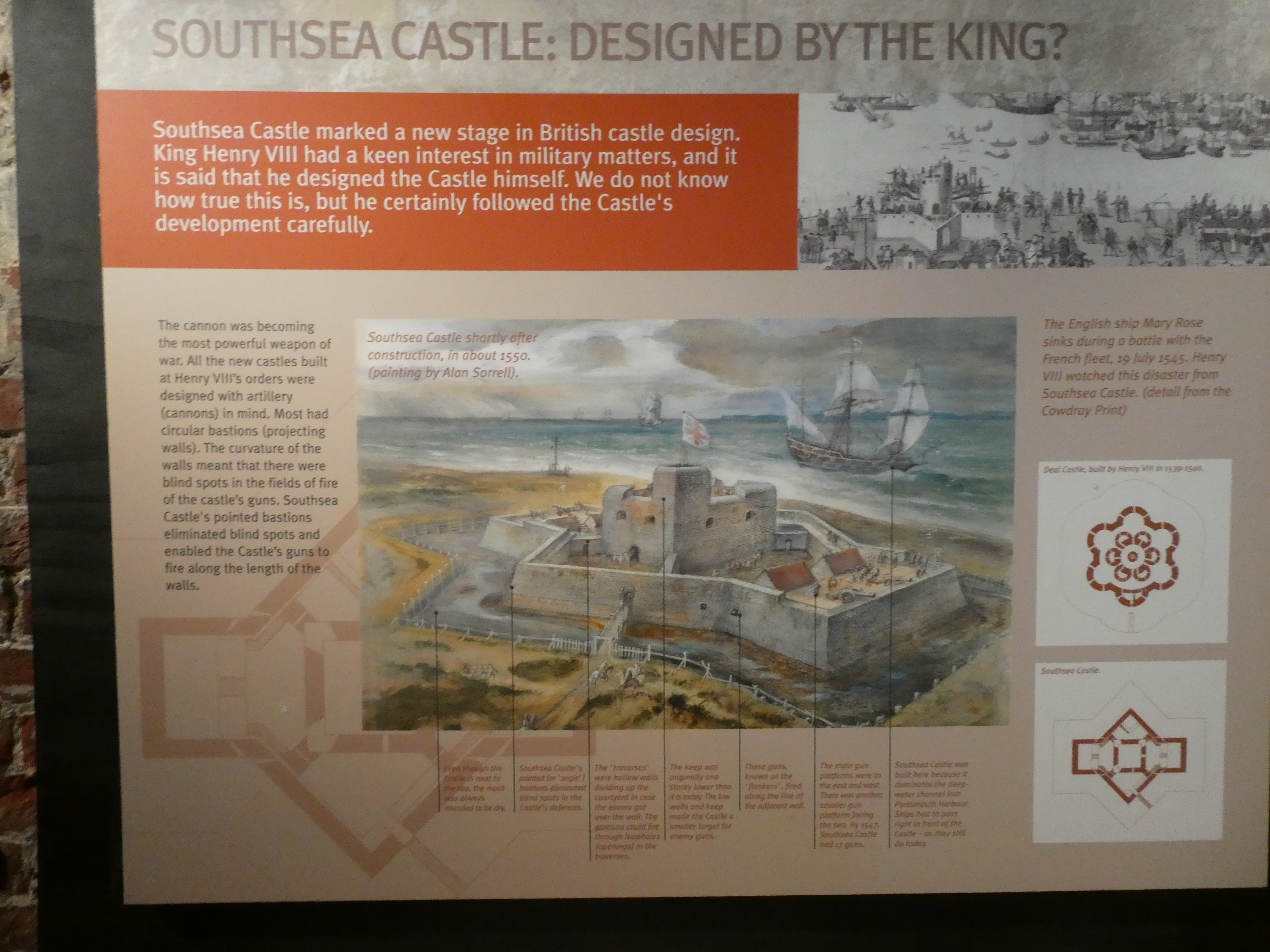
Very close to the D Day Story is Southsea Castle, one of the chain of coastal castles built by Henry VIII.  Once again we were short of time, but I did manage to visit the central keep.


A very enjoyable trip and one that has suggested to me that a further visit to the area would be justified.

Saturday, 27 February 2021

Battle of Egra 300 AD: a Hail Caesar scenario

For the last few weeks Steve and I have been joined by another gamer, David, for our weekly skype/zoom game sessions.  David has hosted a couple of games and this is the most recent. 

The initial deployments; Sassanids nearest the camera

 A Roman army has invaded Sassanid territory and the local Satrap has raised a force to oppose them.  The Sassanids have positioned their infantry  behind a dried up river bed, to offset the Roman infantry's numerical and quality superiority.  On the more open terrain the best Sassanid troops the cataphracts and supporting light cavalry have a clear run at the Roman cavalry.  The Sassanid objective is to hold their position and prevent the Romans from advancing further east.  For the Romans, they need to break through this force and head for the Sassanid capital.

Having won the initiative, the Roman forces (or at least most of them), advanced rapidly and soon the opposing light cavalry were in missile range exchanging arrows and javelins.  As is the nature of light cavalry they proved rather 'skittish'  falling back after taking casualties and evading at top speed from charges.  Both generals were having difficulty persuading their heavy cavalry to actually move forward and the centre of action moved to the centre where one of the Roman heavy infantry units was closing up to the river bed.  

The Roman commander deployed his light troops to the flank to shoot on the Sassanid levy and unsettle them before the heavy infantry charged.  The light troops were driven off by a charge from the reserve unit of cataphracts, but the cavalry were unable to catch the infantry before they reined in.  Undeterred, the Roman heavy infantry charged across the dried up river bed and into the levy.  Against the odds, the levy held then counter-attacked and pushed the Romans back.  The Roman general decided to  bring forward his second unit of heavy infantry and charge the now weakened levy.  They passed through their reforming comrades and readied for the charge.  Unfortunately, the Roman general rolled a 'blunder' at this point and followed it up with a '1'.  This sent the fresh unit back through the other heavy infantry in disorder, stalling this section of the infantry attack.

The Sassanid right turn to face the threat from the Roman archers

On the Roman left, one unit of archers was skirmishing with the Sassanid javelin men covering the front of their spearmen, whilst the second unit embarked on a flank march through the woods, intending to fall on the flank of the levy on the Sassanid right.  Surprisingly, the javelins got the better of the archers, who had to fall back after becoming disordered.. On the flank, once the Roman archers had reached their position and shot at the levy, the levy turned and then returned the favour much more effectively; forcing those archers to fall back disordered as well.  On the right flank of the Roman line the skirmishers had moved forward again to try their luck against the weakened Sassanid levy.  Once again the reserve cataphracts charged to drive them off.  This time they caught the skirmishers and destroyed them.

The cataphracts catch the Roman skirmishers

Back on the Roman right, the heavy cavalry were lumbering forward, although the Roman units had moved out of supporting distance of each other.  At just the right moment the Sassanid cavalry general managed to exert his authority and get his cataphracts moving.  One charged the isolated Roman heavy cavalry unit, the other supported them in their charge.  In this devastating charge the Sassanid cataphracts broke the Roman unit and drove it from the field.  

The Sassanid cataphracts drive off the Roman cavalry

This was the decisive moment of the battle.  The Roman infantry line was now open on its right flank and the reserve Sassanid cataphract unit was well-placed to exploit this weakness.  The remaining Roman heavy cavalry unit was outnumbered and the rival light cavalry forces were fighting each other to a standstill.  With his infantry having made no headway against the Sassanid infantry the Roman general had little option but to pull back.

Many thanks to David for hosting the game.  It was enjoyable and though we both had our difficulties with getting units to do what we wanted it was a balanced scenario.  The rules had sufficient similarities to our version of Pike and Shotte so as to be fairly easy to use.  The main differences being the mechanism whereby one side moves and shoots whilst the opposition do nothing, and rolling a '6' whilst shooting imposes a test on the opposition.  All the troops were David's and he took the photos.


Saturday, 20 April 2019

A short holiday near Hexham

We have just returned from a few days on holiday in the North east of England.  Our hotel was near Hexham and it was an interesting town to visit.  Disappointingly I was unable to find any books or pamphlets on the Wars of the Roses battle which took place nearby, but there were some items of interest in the Priory.


This is the tombstone of a first century Roman cavalry standard bearer which was found  when work was being carried out on the priory in 1881.

There are memorials to Sir Gilbert de Umfreville (1245-1307)


and Thomas of Tynedale (14th century)


The major historical feature of the area is of course Hadrian's Wall and we were close to Chesters Fort.  Their museum has a few exhibits illustrating legionary dress and life.


A military diploma issued after 25 years service


On a trip to Newcastle I was able to spot a surviving stretch of the town walls.


It is well worth visiting this area, it has  stunning scenery and masses of historical sites.

Monday, 21 March 2016

Sheffield Triples 2016

Another week another show.  Saturday saw Steve, John and I head over the Pennines to Sheffield for this year's Triples.  We were putting on the Deepdale game for the Lance & Longbow Society and were delighted to find that we could park just outside the venue rather than across the road in the overflow car park.

Everything was set up by 9.30 so I wandered around a few of the other games

2nd Quatre Bras by Chesterfield Old Boys

General view of the table

The Prussians advance

Massed French cavalry
A big game with masses of 25mm troops, plenty to inspire the gamer.

Next to us were the Brompton Bankers with their Romans v British game using the Eagles Rampant rules.

Roman cavalry

The British await the attack
The Grimsby group put on a naval game, the 4 Days Battle from the Second Dutch War.  A large collection of 1/1200 models showed the action at a scale of 1 model for each participating ship.


The Glory Boys put on Rolica in 6mm


The detail on the figures belied the small scale

We managed to run through our game twice, with victory going to the Earl's forces on each occasion. However, in the second game, the rebels did manage to kill the sheriff, who was leading the Earl's men.  He was killed, along with his entire unit of knights when they rode into a 'storm of arrows' from two units of rebel archers.  Throughout the day visitors stopped to look at the game and ask questions about the scenario, rules and figures.  Some joined in, taking one of the commands.  For us this was the main aim of the day, promoting the hobby and the medieval period in particular.

Overall, the event seemed a good bit quieter and there were gaps where traders had not turned up. Even some of the games tables were empty, though they may have been used on the Sunday. Something is not right. The organisers will need to reassess how they put on the show, or it could fail, which would be a pity as I have been going to it for 15 years.

Tuesday, 20 October 2015

Hadrian's Wall

I will get back to wargame reports eventually, but over the weekend we visited Hadrian's Wall.  It is 40 years since I was last in the Housesteads fort area and that was for a rather rushed visit.  With more time I was able to appreciate the use of terrain and the amount of work which went into the construction of this defensive wall.


A shot from near the Steel Rigg carpark, just west of Housesteads fort.  The route of the wall can be seen on top of the Whin Sill feature and in the distance, leading up to the small wood.

With the clouds brushing the tops of the surrounding hills and late autumn shafts of sunlight failing to instill any warmth, you felt every degree of windchill from the sneaky breeze.  For the garrison of 800 men it must have been a thankless posting, I bet many wondered which God they had angered.

The guiding within the remains of the fort is useful, helping to interpret the foundations which have been excavated.  From the north wall you can see the line of the wall to the east; the gap in the valley is the location of a later gate allowing easier access for wagons.  The original north gate being bricked up.


In the museum you can see a selection of late Roman arrow heads which were discovered during the excavations.


Once the Roman troops left the wall became a very useful 'quarry' for the locals to use.  Over a thousand years later they used the ruins of the southern gatehouse to construct a Bastle House as a defence against Border Raiders.


Friday, 1 November 2013

Glasgow

No game this week as I set off for a short city break in Glasgow.  The aim was to visit the museums and art galleries and this was achieved in fine style; you are spoilt for choice in what used to be referred to as "the second city of the empire". 
At the Burrell collection I came across the small display of medieval armour and weapons

This is a nice example of a late 15th C Burgonet as favoured by the light cavalry of the time.  What I found particularly interesting was the painted tomb of a knight of the Spanish Espres family from the mid 14th C.

There is still some of the detail remaining and it must have been a stunning sight when first completed

The Hunterian Museum, at Glasgow University has recently opened a display of artefacts associated with the Antonine Wall.  Ballista balls and javelin heads have been recovered from the Roman fort at Kirkintilloch as well as lead slingshot from Birrens fort.

A number of the distance memorials are on display.  One of the largest, (a cast of the original) has an excellent representation of a Roman cavalryman
Both museums are free to enter and well worth the visit.  Also worth a mention is the Transport Museum with it's collection of model ships and Kelvingrove with it's armour collection.


Monday, 12 August 2013

Scottish excursion

Last weekend Steve and I visited Alasdair for the weekend.  Our wives accompanied us, so it was primarily a social visit, but there was just time to squeeze in a game on the Friday evening.

In keeping with our location, the scenario featured a Roman patrol into the area north of the Antonine Wall.  The natives had been "restless" and the Pax Romana needed to be re-established.  The local commander had put the patrol under the command of Gaius Plautus Crassus, a keen young man of a noble (very noble) Roman family who saw this as an opportunity to add a military victory to his CV, prior to  a prompt  return to Rome and his political career.  Unfortunately for Crassus, his commander favoured a rival faction and the 'simple patrol' was something of a poisoned chalice.  The Picts were led by a wily chieftain (he styled himself 'king'), who had survived years of tribal in-fighting and delighted in giving Roman patrols a 'bloody nose'.


After two days march, Crassus was approaching the main Pictish settlement.  The commander of a local watch tower reported that none of his patrols had dared to venture out of sight of the tower for two days after a patrol was 'lost' investigating activity in a nearby wood.  The cavalry unit scouting ahead of Crassus' main body reported a number of Pictish slingers by a ford to their front.  Crassus sent the cavalry forward to capture a few hostages and turned to find the watch tower commander heading for the safety of his tower.


Undaunted, Crassus ordered a steady advance, giving attention to preserving close order.  Ahead, the slingers disappeared into the woods to be replaced by light chariots.  The commander of the vanguard cavalry halted, waiting for infantry support, but Crassus had received reports of enemy activity in the woods to his right.  He ordered his archers to turn to face this possible threat and loose a flight of arrows into the undergrowth.  This goaded the Pictish cavalry which was hidden there into a disorderly advance into the open.  Subjected to another flight of arrows they turned and moved out of range.  Buoyed by this minor victory Crassus was about to order the column to reform and continue its advance when more enemy activity was reported by the rearguard cavalry.  One unit of auxilia, a unit of legionaries and the rearguard cavalry were sent to counter this threat.


Meanwhile, on the left, the slingers had reappeared and were showering the auxilia on that flank with pebbles.  Crassus ordered the commander of the auxilia to 'drive off those barbarians' and then turned his attention to reordering the column.  As the auxilia advanced, the slingers fell back, drawing the Roman troops further away from the main body. Soon the slingshot were coming from flanks as well as front and the auxilia had to cease their advance and adopt a defensive formation.

Ahead of Crassus, the Pictish chariots advanced and charged the vanguard cavalry.  The Roman cavalry managed to absorb the shock of the Pictish charge and then began to gain the upper hand.  Abandoning his plan to form up around the supply mules, Crassus ordered two unit of legionaries forward to support the cavalry, leaving him with one unit of legionaries and the archers as a reserve.  Before the legionaries could reach the vanguard cavalry the Pictish cavalry intervened.  The last of the chariots were being destroyed when the Roman cavalry were hit by Pictish cavalry.  Heavily outnumbered, they fought bravely, but were in the end overwhelmed.


Behind Crassus, the warriors of the Bear clan had risen from their hiding place in the hills and charged down on the Roman soldiers.  The auxilia had already lost men to archers hidden in the woods and were unable to withstand the fierce charge of the warband.  However, the legionaries were made of sterner stuff and stood their ground, engaging in a fierce melee with their opponents.  The Bear clan concentrated on the fight ahead and did not see the cavalry moving around them.  With a roar the Roman cavalry charged home, hacking and slashing their way towards the enemy standard.  To their credit the Picts fought on doggedly.  Forming up around their chief and standard they fought to the last and by doing so drew off troops which Crassus desperately needed elsewhere.


With the Roman cavalry vanguard eliminated, the Pictish king launched the warbands of the wolf and his own serpent clans at the Roman line of legionaries.  The right hand unit of legionaries was hit in flank and Crassus charged to their assistance. His standard bearer was killed by his side and he was unhorsed, but he fought on on foot. The Pictish cavalry now made a reappearance and attacked the units guarding the supply mules with showers of javelins.  Their steadiness and drill prevented many casualties, but it stopped them going to the aid of their comrades.

We left the left wing auxilia surrounded by slingers; slowly the number of casualties rose and their commander realised that the only course open to them was to break formation and run for the main body.  This they did and some did make it back across the stream, but many were felled by the slingshot and then finished off by swords.  The slingers then began to move towards the supply mules.

The Romans were on the brink of defeat, but at the last minute the rearguard cavalry arrived, having destroyed the Bear warband.  Their arrival forced the slingers to pull back and lifted the morale of the hard pressed legionaries who just held the line against the Serpent warband.   However, the cavalry arrived too late for Crassus, who died fighting to the last with his legionaries.  With night falling and the Roman position holding, the Pictish king called off the attack.  There would be no attack on his 'kingdom' now and as a bonus, the losses of the Bear clan meant that their lands could be 'absorbed' within his own.

When the Roman patrol returned to their camp and reported the action, the camp commander was moved to write a letter to Crassus' parents extolling his bravery and saying 'he died like a Roman should'.  To his political masters he could report that the way was now clear for their candidate to enter the Senate and perhaps a posting in Italy could be obtained for him?

Many thanks to Alasdair for the scenario and his hospitality over the weekend. 

Sunday, 23 October 2011

Ancient flats

In more ways than one. These Egyptian, Nubian, Greek et al figures are getting on in years. Their provenance is uncertain, but looking at them brings back memories of the grainy black and white photographs from the pages of the Featherstone classic "War Games". In particular the battle of Trimsos between forces from Hyperborea and Hyrkania.


The Greeks are the most numerous, with a solid phalanx of hoplites, supported by smaller units with cavalry on the wings.


They have very few light infantry, unlike the coalition assembled against them who have swarms of Nubian and Egyptian archers, javelins and slings. What really catches the eye are the elephants and chariots.


The skill of the painter in making these two dimensional figures look 3D has to be admired. I did have some problems getting the focus correct when photographing these flats and so have not really done them justice.