Showing posts with label ECW. Show all posts

Tuesday, 31 December 2024

Never Mind the Matchlocks trial


 Steve, Bob and I have played quite a few games of 'Billhooks', so we thought we would give this set of rules a go.  As you would expect they are very similar, though matchlocks replace bows and cavalry are more numerous.  Brigades replace Battles as the element of command.  One interesting change is that there is now an army commander, who can either carry out an action himself, or, give an extra action to one of his commanders.  As with 'Billhooks' it is a card driven system so not all commanders will have the opportunity to act each turn.

An infantry brigade ready to advance

Preparing to exchange volleys

We tried out a simple scenario featuring a roadside inn.  The two cavalry forces entered combat fairly quickly and it was fairly bloody!  Starting with 4 brigades, each with 2 units in no time half had been eliminated, having failed their morale tests or had been wiped out.  Of the remaining four, three were below half strength.

The remains of two cavalry units after a round of melee

Cavalry charging a gun

Infantry are either musketeers, pikemen or forlorn hope skirmishers.  Ammunition for formed musketeer units (including those in composite units with pike, is limited to 6 rounds (with an extra one on the basis that the unit is assumed to be already loaded.  This does encourage advancing into close range (9" or less), as at long range hits are only scored with '6's.  Saving throws are 5+, so hits can 'stick' and build up quickly.  Interestingly, on mixed pike/musket units all the hits are assumed to fall on the muskets, which some may find odd and wish to change.  

Morale is the same as for 'Billhooks'.  The composite matchlock and pike units add 2 to their morale test so only a double 1 spells disaster.  Nevertheless, I did manage it.

Very rarely a good result

Our first attempt seemed to run ok, and with use I can see we could easily play a game in a three hours.  If you have played 'Billhooks' and like the system and also have some Pike and Shot troops they could give a small scale action alternative to Pike and Shotte or one of the other rule sets available.  

My apologies for the grommets in use as casualty counters.  The rules require figure removal and all our figures  are on multiple figure bases.

Not been a particularly productive year on the blog, but I hope to post more frequently next year.  In closing, I would like to wish all my readers a peaceful and prosperous 2025.

Wednesday, 15 May 2024

Sussex

 My wife and I have just returned from a very enjoyable coach tour to West Sussex.   There were several organised trips, but on one of our "leisure" days we decided to go to Chichester, which is well worth a visit if you haven't already been there.  Close to the glorious cathedral there are remains of the city walls, which date back to Roman times.   They fell into disrepair several times, but in time of need they were repaired and provided some security for the inhabitants up until the Civil Wars of the 17th century.  In December 1642 the city was besieged by William Waller and surrendered after six days. 


After a light lunch we went to the Novium Museum link .  There is a fascinating display called 'Mystery Warrior: North Bersted Man'.  Archaeologists discovered the grave of an Iron Age warrior and further research and analysis revealed that he probably came from Gaul c 50BC.  The most surprising element within the burial were the warrior's helmet and crest. 

One of the two crests found in the grave

The helmet and clasps


A reconstruction of the helmet with its crests

Artist impression of the warrior
There are a couple of videos produced by the Novium Museum about Bersted Man on you tube. 

On our final day we went to Portsmouth.  We had some free time in the morning, but not enough to do justice to the Portsmouth Historic Dockyard and Museum of the Royal Navy, sadly that will need to wait for another trip.  However I did get a couple of photos of HMS Warrior.


After lunch it was off to Southsea and the D Day Story museum.  As with all modern museums it contains a mix of audio-visual presentations and large and small exhibits.

An armoured recovery vehicle

Outside the entrance to the museum was a LCT, complete with a couple of tanks.  I hadn't appreciated how large these vessels were until I stood on the ramp and saw how small the tanks looked.


That being said the space for the crews (tank and vessel) was pretty limited.  Moving around while the vessel crossed the channel must have been hazardous with plenty of rivet heads to trip over and hard edges to fall against.

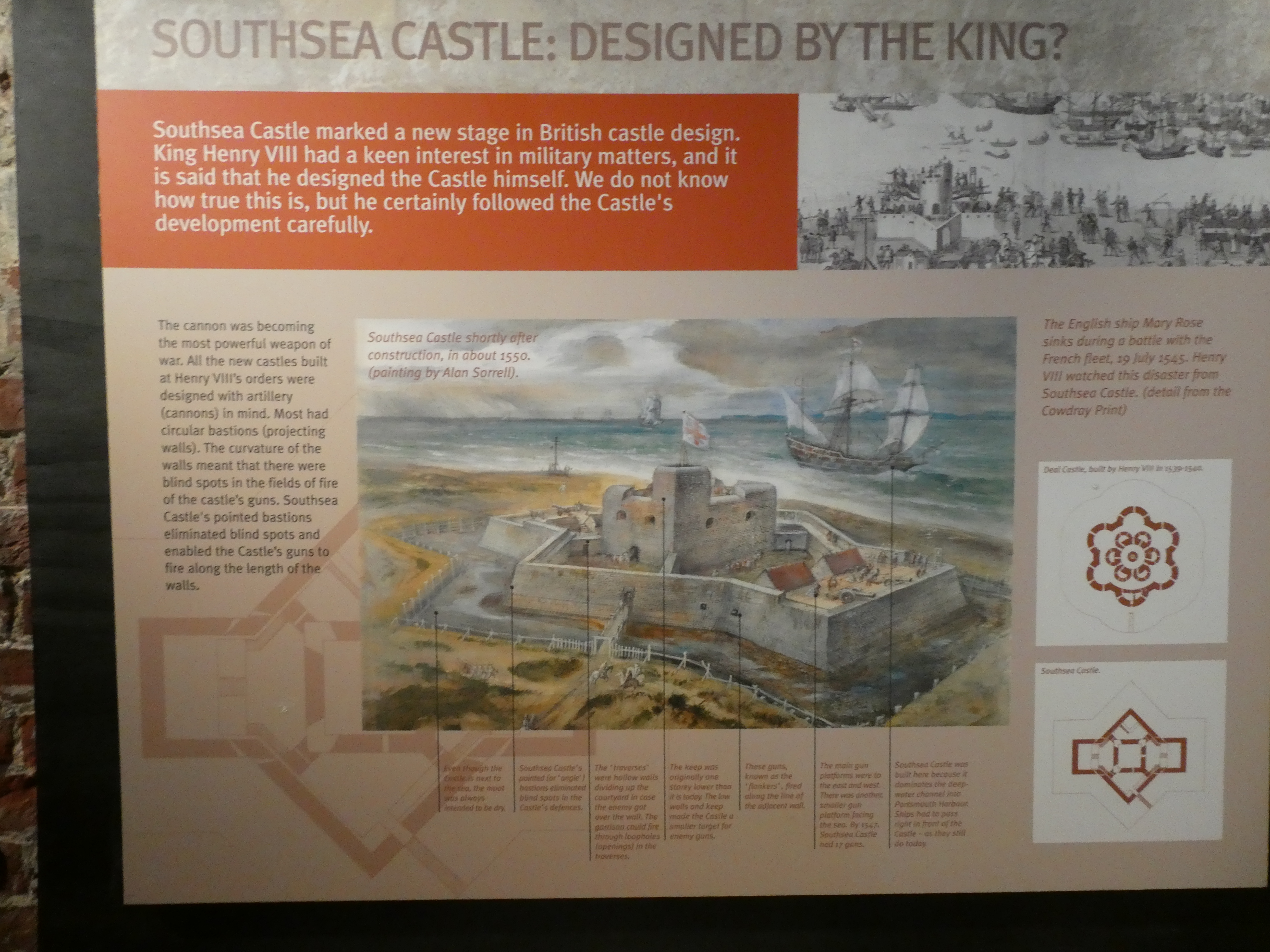
Very close to the D Day Story is Southsea Castle, one of the chain of coastal castles built by Henry VIII.  Once again we were short of time, but I did manage to visit the central keep.


A very enjoyable trip and one that has suggested to me that a further visit to the area would be justified.

Saturday, 2 March 2024

Catlow's Worth; A Kelhamshire Scenario for Pike and Shotte

The third installment of the mini campaign to raise the siege of Edgerton House is set at Catlow's Worth.  A 'worth' is an old Kelhamshire word for an enclosure; and the enclosures owned by Richard Catlow figure prominently in the action which follows.

Following Sir Victor's failed attempt to raise the siege of Edgerton House, he was falling back to a more secure area.  However, Lord Melchett was not willing to let his old adversary 'off the hook', and was prosecuting a vigorous pursuit.

View along the battlefield, the Parliamentary army will
 take up a position on the right of the picture

View from the Royalist start line
Sir Victor has 4 units of foot, 4 of horse, a unit of dragoons and a light gun.   Sir Victor has ordered Colonel Robinson to deploy the cavalry on the right of the line and Colonel Wanless to occupy the fields (Catlow's Worth) and cover the road .  The dragoons were ordered to the left to cover that flank.  

Robinson's cavalry

Bentham and Ireby's regiments still moving towards their positions


Mytton , Leck (blue flag) and the artillery  moving into position


Parliamentary dragoons

 In addition to his Lifeguard. Lord Melchett has 4 units of cavalry and a unit of dragoons with Sir Royston a Dammes,  3 regiments of foot and a unit of commanded shot and lagging some way behind, two medium guns.
Lord Melchett deployed his cavalry on the left with the foot on the right together with Lord Melchett and his Lifeguard.  Sir Royston wasted no time in sending the dragoons forward to occupy the woods by the road junction and bring the leading Parliamentarian cavalry unit under fire.  Once the dragoons had begun to move into the trees he sent his largest unit, Ashton's, forward .  He also sent Bracewell's regiment towards the left to pin the Parliamentarian cavalry positioned behind the stream.  De Lisle's and Catlow's regiments were held in reserve.  Meanwhile, Nicholls had ordered the commanded shot forward into the woods near the enclosures and Clifton and Bradshaw's regiments to advance between the woods and the road.  Lord Melchett moved to the right with his Lifeguard and Smethurst's regiment.


The Royalist cavalry and dragoons


The Royalist foot with Lord Melchett and his Lifeguard

The action began with a clash between  the regiments of Ashton and Thursby.  A protracted melee resulted in both units having to withdraw to reform and recover.  However, Sir Royston had the advantage of having units available to exploit the situation, while Robinson's other regiments were on the other side of the stream and risked disorder crossing it to engage the enemy.  

Thursby's and Ashton's regiments clash
Sir Royston ordered De Lisle's regiment forward and they crashed into Thursby's regiment while they were still recovering.  It was all over in the blink of an eye and Thursby's were soon routing back along the road.  Sir Victor galloped over to try and stem the rout, but was swept from the field in the maelstrom of horses and riders.

Thursby's broken by Bracewell's fresh regiment 


Sir Victor fails to stop Thursby's rout
De Lisle didn't pursue his beaten opponent, but paused to reform.  This proved to be a costly error as  they suffered significant casualties from a salvo from Bentham's regiment and were then charged by Bannister's regiment of horse.  This forced the Royalists back and for a time peace returned to this area of the battlefield.  In the enclosures matters were coming to a head.  

The Parliamentarian foot and artillery had been slow to take up their positions, particularly Leck's regiment nearest the road.  To their left, Mytton's regiment had been engaged in a musketry duel with the commanded shot and had the worse of the encounter, though their greater stamina had allowed them to continue firing while the Royalist musketry had slackened.

The Royalist's advance on the enclosures
To the left of Mytton the dragoons were firing at Smethurst's regiment which was advancing towards them.  Heavily outnumbered the dragoons had little chance of holding their position, and if they fell back it would create a gap which could be exploited by Lord Melchett's Lifeguard.  The colonel of Mytton's regiment saw the threat and decided to redeploy his regiment to face the left and fire into the flank of the Royalist infantry.  This unexpected order caused confusion within the regiment and the manoeuvre was much delayed.  Seeing the confusion, the commanded shot seized their chance and moved quickly to the recently abandoned hedge of the enclosure from where they were could fire into the flank of Mytton's regiment.  In the event, the Parliamentarian manoeuvring  had been unnecessary, as Wanless had ordered his reserve regiment, Ireby's, to move to the left to assist the dragoons.  In the end, Mytton's regiment had to fall back out of the enclosure and defend the hedge there. 


The Royalists charge home
In the right hand enclosure battle had been joined.  Leck and the artillery had the opportunity for only one round of firing before the Royalist regiments charged home.  The gunners decamped almost immediately, leaving their gun and heading homewards.  Leck's regiment held back the more numerous Clifton until Bradshaw's regiment crossed the hedge and threatened their flank.  As the Parliamentary infantry edged back, a final push from Clifton routed them.


Ireby had arrived in time to see Smethurst's regiment push back the dragoons.  He charged the Royalists, but got the worst of the encounter and had to fall back to reorganise.  Sir Victor returned to the battlefield to find that three quarters of his infantry were falling back, his artillery had been abandoned and that his cavalry were heavily outnumbered.

In the distance he could see Sir Royston readying his regiments to exploit the disorder in the Parliamentary forces so he ordered Robinson to disrupt any threatened attack.  Robinson had only two weak regiments available, but he did what he could.  Kippax's regiment was sent across the ford to attack the flank of any attack along the road and Bannister's regiment moved up to block the road itself.  Meanwhile Sir Victor  and Wanless were doing their best to rally and then shepherd their battered infantry from the field.  

Sir Royston launched Ashton's regiment forward to complete the rout, with his other regiments moving forward in pursuit.  Robinson's units attacked the much larger Ashton but could do little to slow the advance.  It was left to Bentham's foot to try and hold off the pursuit.  Night saved them from total annihilation , but they paid a heavy price.

Lord Melchett was pleased with his victory.  Taken together with the capture of Edgerton House, the campaign could be seen as a success.    Sir Victor had been giving a thorough drubbing and there may be opportunities for further gains while the Parliamentary forces reorganised themselves.His one concern was the artillery.  It had taken far too long to get to the battlefield and paid little part in the action.  If only he could get it to be more mobile.

Tuesday, 13 February 2024

Raising the siege of Edgerton House: an ECW Kelhamshire scenario for Pike and Shot

 Lord Melchett's and Sir Victor Meldrew's struggle for control of Kelhamshire continues to generate interesting battles.  This, the latest installment, is part of a mini campaign where Sir Victor is attempting to raise the siege of Edgerton House.  Edgerton House is owned by Sir William Edgerton, a staunch supporter of the Parliamentary cause.  He has used his home as a base to raid nearby Royalist areas and generally be a thorn in the side of Lord Melchett.  Having had enough of the troublesome Sir William, Lord Melchett has besieged Edgerton, entrusting his senior engineer Jakob Van Oord, with the technical aspects and Sir Harvey Nicholls with the military prosecution of the siege.  Sir Harvey has three units of foot plus a unit of commanded shot.   Van Oord's artillery consisted of 2 medium guns and a mortar and these were beginning to seriously damage the defences of Edgerton House.  Sir Harvey had sent his only unit of horse off on a scouting/foraging mission.

Sir Victor is determined to come to the aid of Sir William and has gathered a force to relieve Edgerton House.  In an earlier action, Lord Melchett had tried to intercept Sir Victor's force, but had been unsuccessful.  This means that Sir Victor is now approaching Van Oord's siege lines and Sir Harvey is going to have to hold off the attackers and hope (pray?) that help comes in time.

View of the table, with the Royalist siege lines on the left

Sir Victor's force consists of 4 units of foot, 2 light guns and 4 units of horse plus a unit of dragoons.  The foot and artillery were under the command of Colonel William Wanless and their advance was preceded by the dragoons.  The cavalry were advancing on another road to avoid congestion.  Their commander, Sir Andrew Goldshaw had been injured at the earlier action and command now fell upon the relatively inexperienced Colonel Edward Robinson.  Sir Victor was accompanying the foot, urging them forward at their best pace.

As the infantry column advanced along the road, Sir Harvey's cavalry appeared on their left.  Sir Victor anxious to secure his flank, took command of one Colonel Wanless's regiments and led it to the left to face the enemy cavalry.  Meanwhile, the Parliamentary horse had arrived and were moving quickly towards the enemy siege lines.

Sir Victor supervising the advance of his infantry

Sir Harvey was having difficulty getting his men to face the threat to their rear.  One unit misheard the order and instead of about facing, moved towards Edgerton House.  Others struggled to manoeuvre within the siege lines and only the commanded shot responded quickly.  Van Oord was somewhat reluctant to move his guns, but the mortar responded fairly quickly and was soon lobbing shells (or bombs) at the advancing Parliamentary troops.

The Royalist siege lines

The advance of the Royalist commanded shot convinced Colonel Robinson he should attack and he pressed forward to gain room to deploy.

The Parliamentary cavalry advance

It was at this juncture that Sir Roystron A'Dammes and Lord Melchett appeared with a brigade of Royalist cavalry and a unit of dragoons.  Lord Melchett sent the dragoons to his right to harass the Royalist cavalry still in column on the road and then Sir Royston led the cavalry towards Edgerton House.
Sir Royston arrives with the Royalist cavalry

Colonel Wanless had ordered the dragoons to line a hedge and dissuade the Royalist cavalry foragers from approaching the infantry column.  His main concern however, was the road junction ahead, where the columns of infantry and horse were both trying to get forward.


The dragoons cover the flank


The log-jam where the roads meet

The leading Parliamentary cavalry regiment had deployed and charged the commanded shot.  The second regiment had deployed and moved against the returning foragers.  Against the odds, the commanded shot repulsed the Parliamentary cavalry, forcing them to retire in disorder.  The second regiment had more success against the returning foragers.  The Royalist horse were driven back towards the siege lines, but the Parliamentary horse did not follow up  and consequently suffered heavy casualties from musketry fire from the Royalist infantry which had at last sorted themselves out.

Sir Victor was still leading his infantry regiment around to the left to bring it onto the hill close to the Royalist siege lines, but poor going made for slow progress.  Sir Harvey ordered the commanded shot into the woods flanking the road the cavalry were advancing along.  To make matters worse, the dragoons also moved to a position flanking the road.  Colonel Robinson pulled back his horse regiments, leaving room for Colonel Wanless to deploy one of his regiments to attempt to drive off the Royalists.  The Parliamentary light guns also deployed to add their firepower.

Lord Melchett had taken his Lifeguard of Horse to the left to try and add further to Colonel Robinson's woes, but Robinson had a unit in reserve and this moved to counter the Royalist attack.  A prolonged melee ensued with the initiative passing back and forth and resulting in both units having to fall back to recover.

Wanless had ordered the dragoons to move to the woods on the left of the infantry on the hill and had also sent a second unit to join the one which was already established there.  It was at this point that Sir Royston arrived in the centre with his cavalry.  His leading unit deployed and then charged up the hill to attack the Parliamentary infantry.  An ineffectual volley failed to stop them and the cavalry charged home.  Try as they might the Royalist cavalry couldn't break into the infantry formation and had to fall back to recover.  As the Royalist cavalry fell back, the Parliamentary infantry were subjected to fire from the Royalist artillery and foot.


The Parliamentary foot began to waver, even though they now had supports.  Sir Royston decided to try again.  Gathering another regiment of horse he charged up the hill again.  Even though they were now shaken and disordered, the Parliamentary foot held their ground and delivered a volley which stopped the charge in it's tracks.


Meanwhile Colonel Wanless was trying to push back the Royalists lining the lane.  The fire from the light artillery was having little effect against the dragoons and so he ordered a charge.  Naturally, the dragoons evaded, but did not move away quickly enough and they suffered heavy casualties as the foot fired a volley to hurry them on their way.

Wanless orders an attack on the Royalist dragoons

The Royalist artillery, ably directed by Van Oord, targeted the Parliamentary infantry and soon reduced one gun to a heap of wood and metal.  Desperate to save his other gun, Wanless ordered it to pull back, which meant that the Royalists now turned their fire on Robinson's cavalry.  Suddenly there was a loud explosion and the mortar exploded, killing its crew and the hapless Van Oord who was directing its fire.                                      


From his position on the hill near the siege lines, Sir Victor decided that further progress was going to be difficult.  He would need time to clear the commanded shot from their position in the wood and any attack by his horse or foot would be in the teeth of artillery and musketry fire.  Also, Sir Royston still had the advantage in numbers of horse, in spite of his losses.  Summoning one of his staff he ordered them to find a couple of volunteers to try and break through the siege lines and inform Sir William that he, Sir Victor, was having to pull back the army and that he should seek terms from Sir Harvey.

For his part Lord Melchett was keen to harass Sir Victor all the way back to his base and set about organising a vigorous pursuit by as many men as Sir Harvey and Sir Royston could spare.

Friday, 30 June 2023

Almost Cropredy Bridge ; An ECW scenario set in Kelhamshire

 Traditionally, the Sunday of the Phalanx Show weekend Steve hosts a big game for the Gentlemen Pensioners.  This year he selected an ECW game set in Kelhamshire using our in-house version of the Pike and Shotte rules.  The table was 16 feet by 6 feet and he had assembled around 1500 figures divided into 8 commands, 4 per side.

A view from behind the Parliamentary right flank

  
The Royalist army in march column

The scenario starts with the Lord Mechett's Royalist army marching north in column.  Half of the vanguard and half of the rearguard (both composed of cavalry) are off table.   Sir Victor Meldrew's forces appear on the Royalist flank, but only half the brigades are immediately available, the remainder are still making their way over various bridges and fords.

The Parliamentary infantry advance in the centre

There was soon action on both flanks as the opposing cavalry commanders tried to gain ad advantage.  The situation on the Parliamentary right was the most fluid, with units charging and counter-charging and the balance tilting one way and the other.

The Parliamentary cavalry attack their opponents who are still in column


A couple of photos provided by John
(the Royalist cavalry commander on this flank)

On the opposite flank, the Royalist cavalry commander was having difficulty recalling his leading units, but the leading infantry brigade continued marching forward and then deployed to give support.  This secured the Royalist right, but did mean that the central infantry were outnumbered.

The Royalist cavalry begun to form up, with their
infantry deterring an early Parliamentary charge


The impasse on the Royalist right/Parliamentary
left from both sides

In the centre, the Parliamentary infantry were having a few problems..  One unit  had 'blundered', received no orders and just stood in position  blocking the exit from the bridge.  This meant that a co-ordinated advance by all four brigades was not possible..  

The dragoons on the Parliamentary left deploy into some woods

In what was to prove a significant move, the cavalry commander on the Parliamentary left ordered his dragoons to move into some woods.  This one unit drew the attention of two Royalist infantry units , plus a gun even though the dragoons firepower was relatively small.  

The piecemeal advance of the Parliamentary infantry

The left hand Parliamentary infantry general gathered his units in the lee of the low hill in the centre and then advanced all of them together to threaten the Royalist centre.  His colleague on his right had got his first brigade forward at last, but the second was still crossing the bridge.  Nevertheless, the right hand infantry commander moved forward to engage the enemy, trading volleys, hoping to pin his opposite number in position.  For his part, the Royalist commander used just enough of his units to hold his position and maintained a reserve against possible setbacks.

The two infantry brigades on the left of the Royalist centre

Having made little progress exchanging volleys, the Royalist infantry commander decided to charge the Parliamentary infantry on the hill.  One of his units was stopped in its tracks by a telling volley, but the other continued up the slope into contact.  


There was no quick victory, but gradually the Parliamentarians gained the upper hand and pushed their assailants down the slope.  To the left of the melee the Royalists were gaining the upper hand in the musketry exchanges and the leading Parliamentary infantry unit was beginning to waver. Further to the left another Parliamentary infantry unit was pushing forward, but the courier carrying Meldrew's order for it to charge must have been unhorsed, because nothing happened.  Perhaps sensing a little unease among their opponents, the Royalists did not stand on ceremony and charged themselves.  A rather feeble volley did little to stop them and they crashed into the Parliamentary ranks.

More fighting in the centre

 On the Royalist right the cavalry battle had begun in earnest.  The Royalist commander had broadened his attack by moving round a small wood and forced his opponent to move his reserves to meet this threat.


Unfortunately, we now ran out of time, as some of the participants had to start their journey home.  A good day.  Thanks to Alasdair, Andy, Bob, Chris, Dave, John and Will for taking the various commands. Also, Steve for devising, setting up and umpiring the game and also explaining some of the finer points of the rules to those who were not familiar with them. 


The essential logistics ( a fine lunch) were provided by Gwen and Lynne.  

Perhaps it was as well for the Parliamentary cause that we stopped when we did.  The first cracks were starting to appear in the Parliamentary infantry I was commanding.  One unit was routing and a couple of others were shaken.